Cittern Guitar info
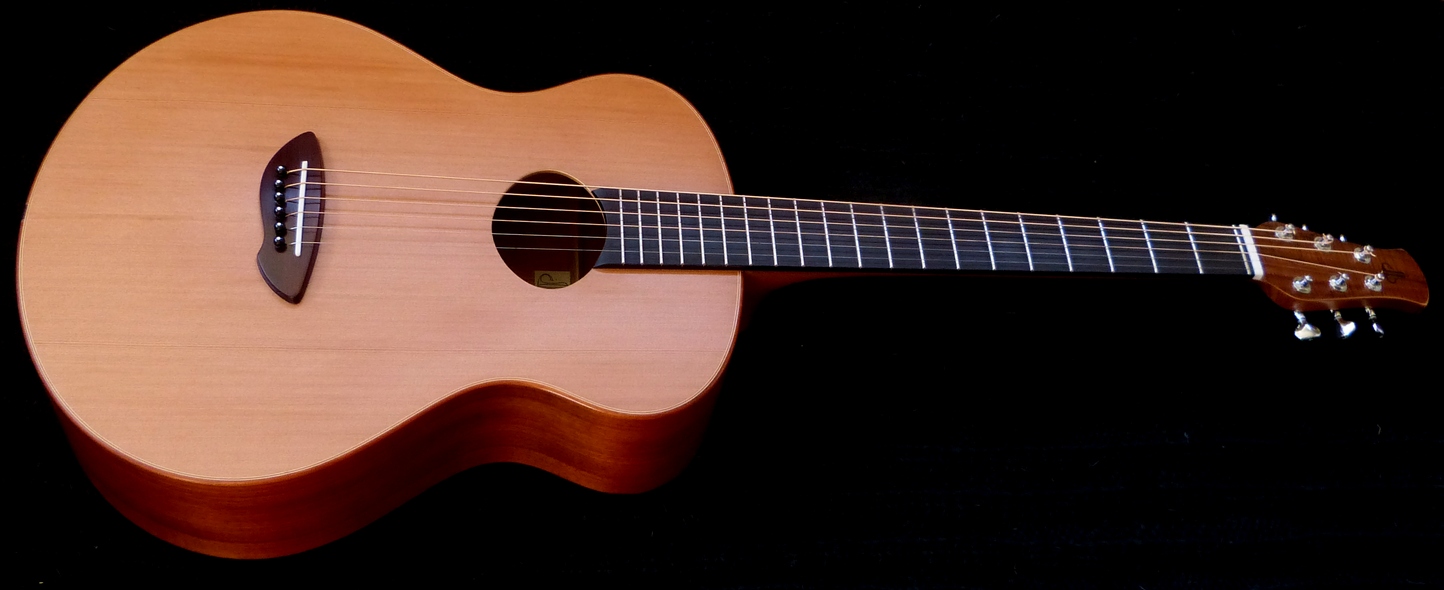
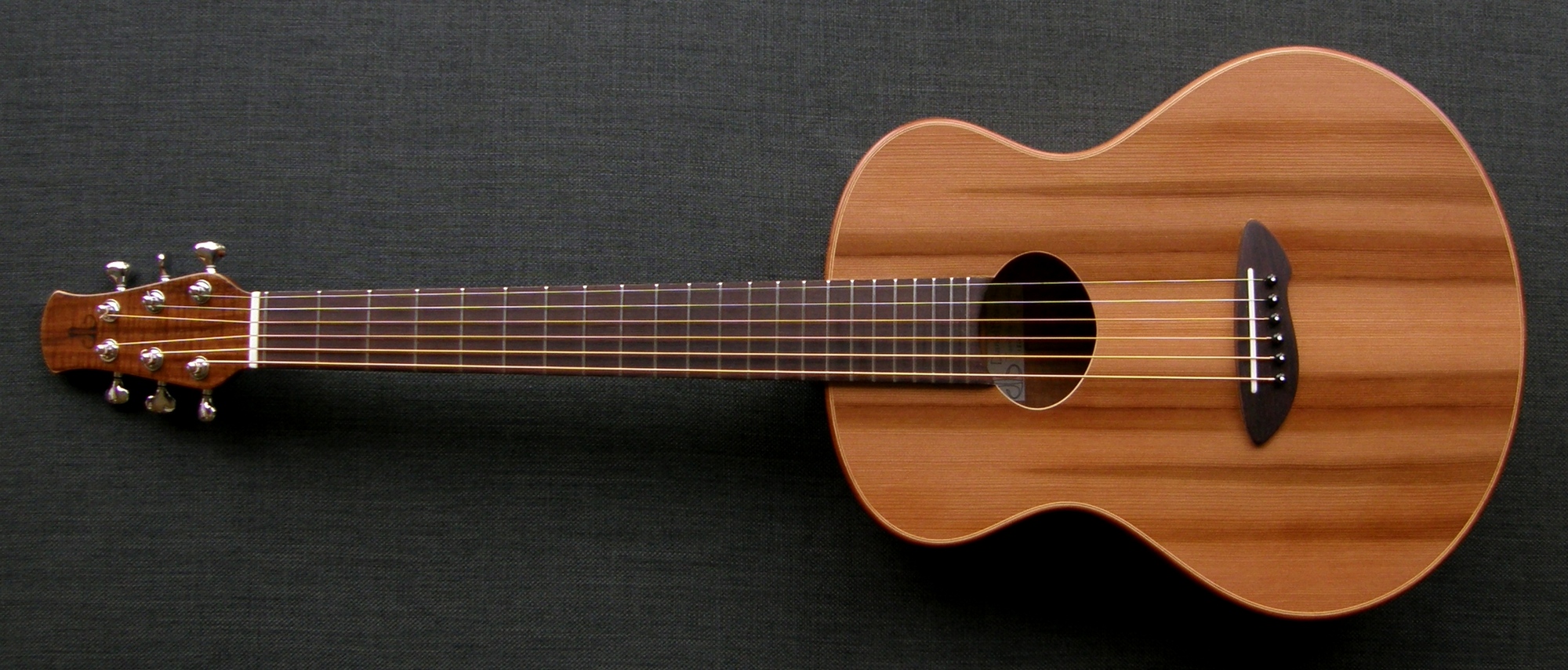
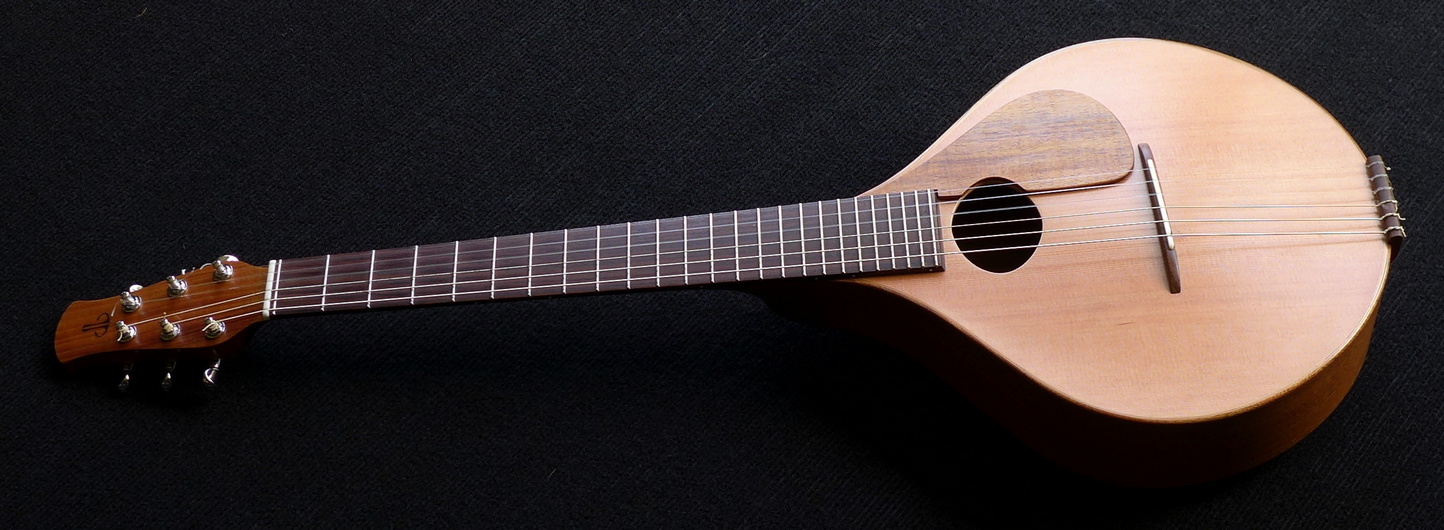
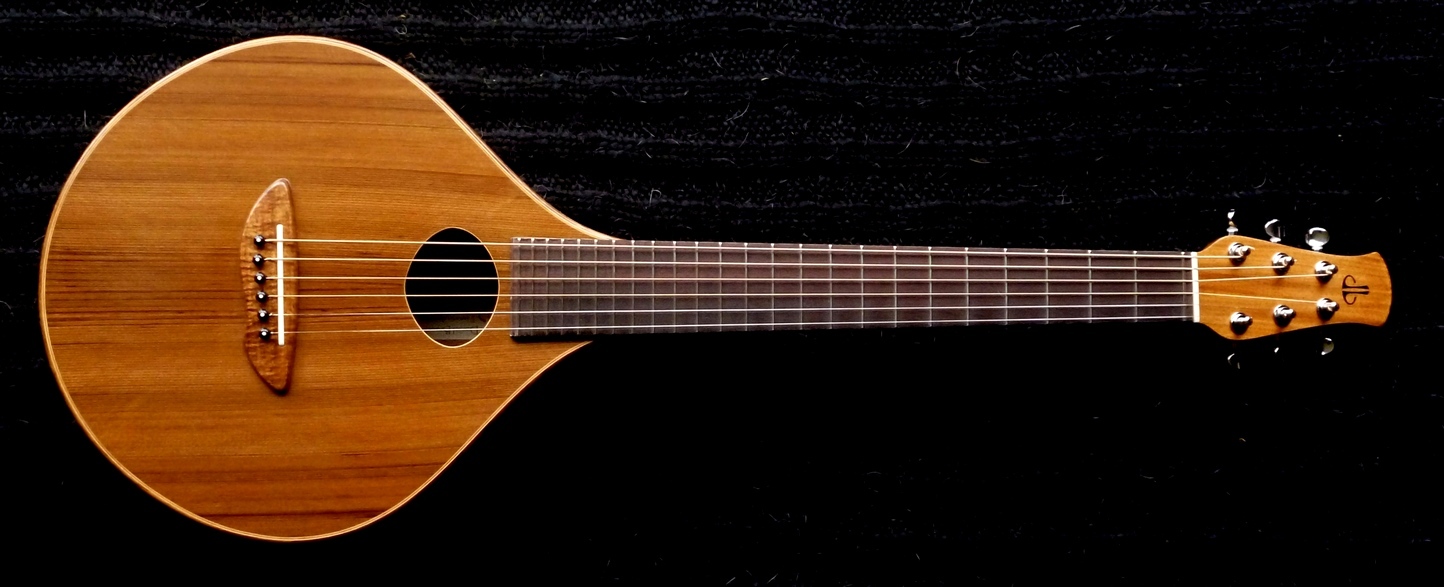
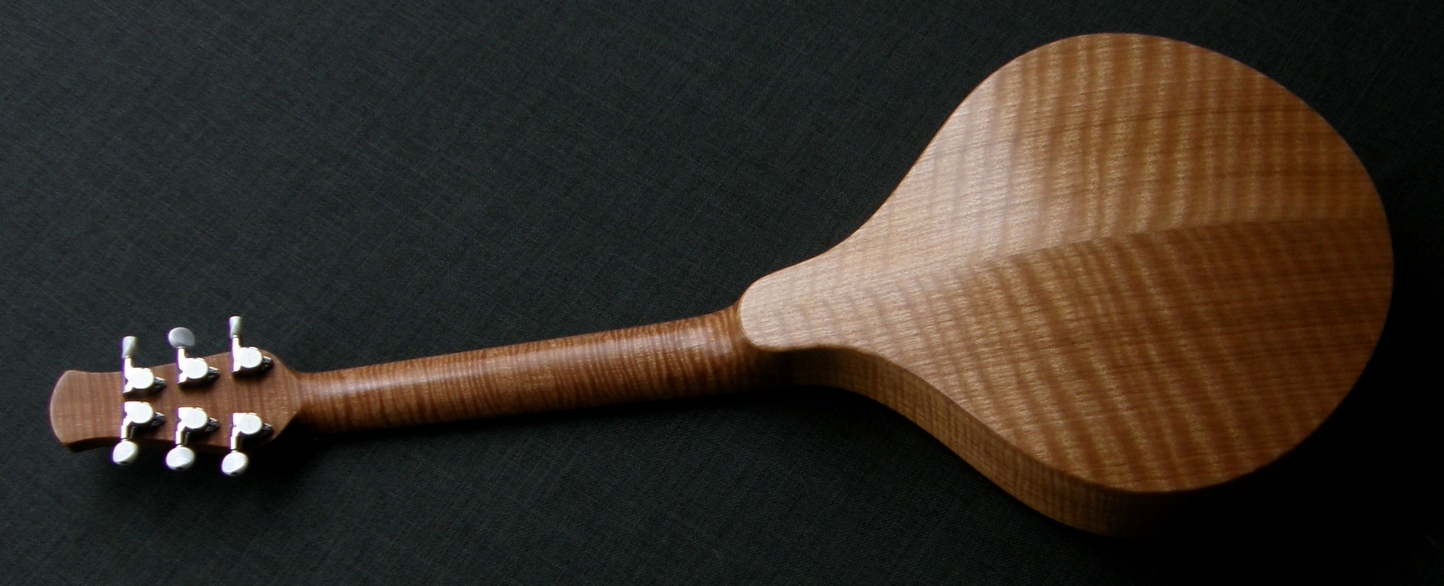
The cittern guitar is not that different to my normal guitar. It simply has a single bout instead of a double bout guitar shape. By using full phase carbon bracing these small instrument deliver a big sound. My main reason for the design is the accessibility of the neck and the physical balance of the instrument. It needs to be played with a strap, which could be seen as a negative, but I see it as a positive because draping a guitar over your leg is a poor playing position and creates bad habits like hanging on to the neck.
The classical or fluorocarbon string version plays best at it's scale pitch, so a 542mm scale that is 3 frets shorter than a standard guitar likes to be tuned up to G which is 3 semitones higher than standard. Info for fitting fluorocarbon strings.
If you want to know more about how it works, it is worth reading my design page.
More info and specs
My guitars are currently
made from Tasmanian Blackwood with WR Cedar, Blackwood or Engelmann Spruce soundboards.The
cittern guitars can also be made with fiddleback Eucalypt body like the one shown above.
Fingerboards are Indian Rosewood. Radius is about 16". Bridge is Blackwood or Rosewood. The longest scale that I do is 644mm but because if the responsiveness of a light carbon braced top, I prefer 1 or 2 frets shorter
If you want to experience what a short scale guitar would feel like, simply put a capo on the first or second fret of a guitar and tune it down to standard E.
My standard string spacing
at the bridge is 58mm between E strings. (about classical guitar
standard)
My standard nut size is 44mm
to 46mm depending on the scale etc. which is slightly wider than steel string
width but not as wide as a classical. These widths are my choice for
speed and accuracy but they can be altered for individual needs.
I put the strings slightly off center so that there is a bit of extra fingerboard next to the high E string on the fingerboard. This allows for more aggressive lead playing without worrying about the string slipping off the neck.
Frets on my steel string guitars are stainless steel on the neck and nickel silver over the body. The carbon string versions are all nickel silver.
I put fret markers on the
side of the fingerboard and not on the front (5, 7, 12 and octaves). I have always objected to
dots on the front of the fingerboard on the basis that if you can see
them, you are holding the guitar badly.
I use 3mm (1/8th inch) back and sides plus and a weighted tone ring around the sound board for better projection. This means that the resulting instrument is heavy for it's size.
Pickups
The undersaddle pickups that I use are a low profile high output piezo version that I make myself. I charge $100 aud
to supply and fit one. These do not have a preamp so you have to be aware of the ultra high impedance of piezo elements. Mixers often don't like this impedance but going into a foot pedal or precessor first usually fixes the problem.