 |
 |
 |
 |
 |
 |
 |
|
|
 |



Mandolins
These can be divided into
steel strung instruments with a tailpiece and an arched top, and polymer strung instruments with a fixed bridge. They fill a similar role but the feel of playing them is quite different.
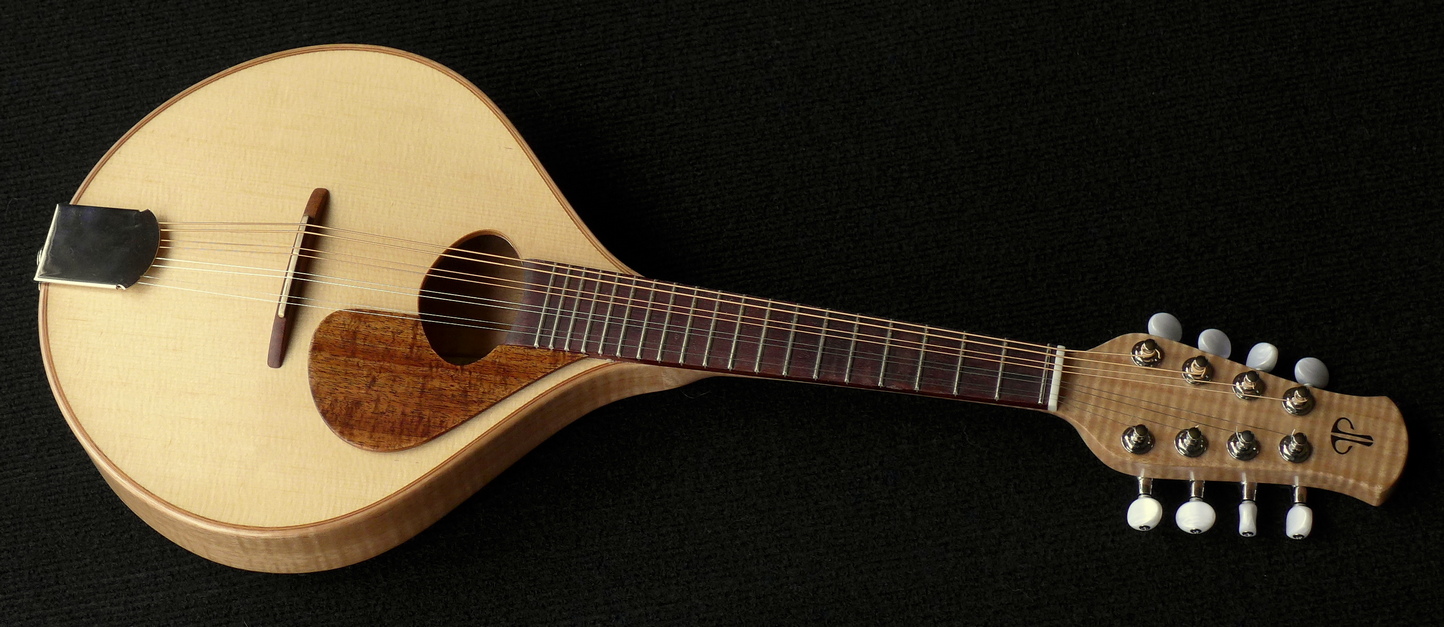 |
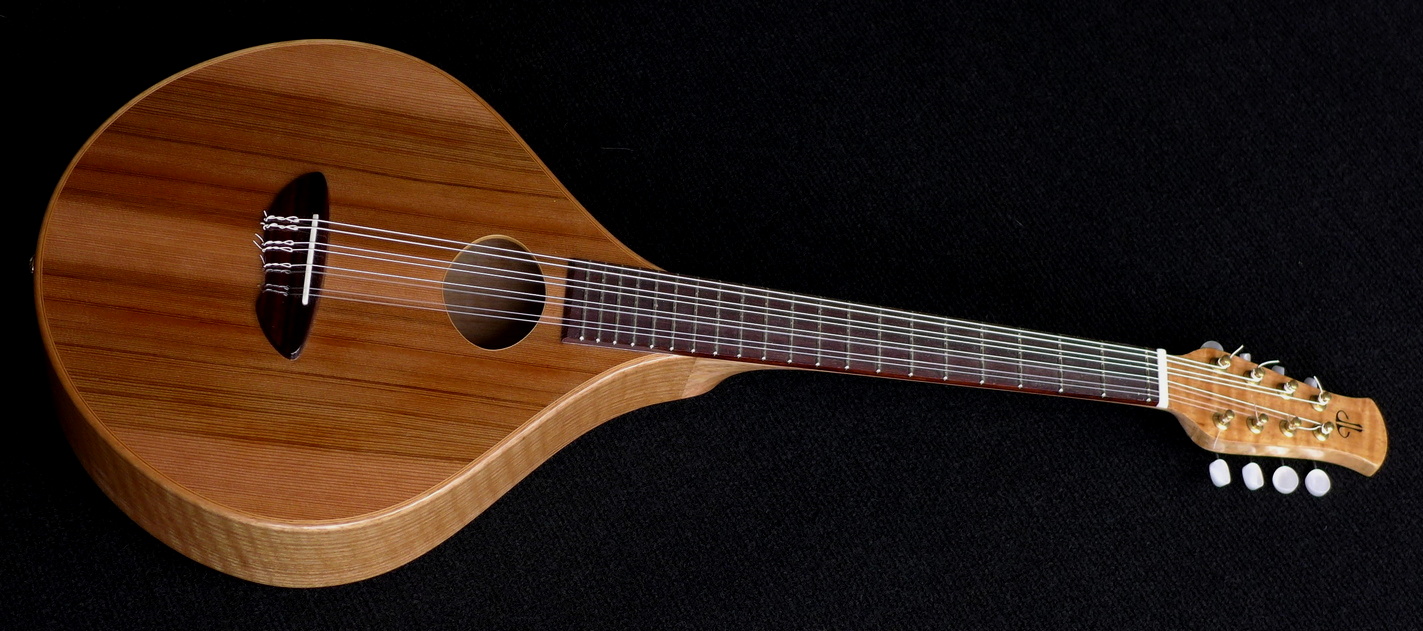
Steel String The soundboards are shaped and reinforced with a carbon lattice. This makes the soundboard lighter and stronger than a standard design, needing less effeort to achieve good volume. My bridge uses a saddle slot which works very well with an undersaddle pickup. I am using stainless steel frets in the main playing area because they last many times longer than the standard nickel silver. I put fret markers on the side of the fingerboard at frets 5, 7, 12, 17 and 19. |
|
 |
||
 |
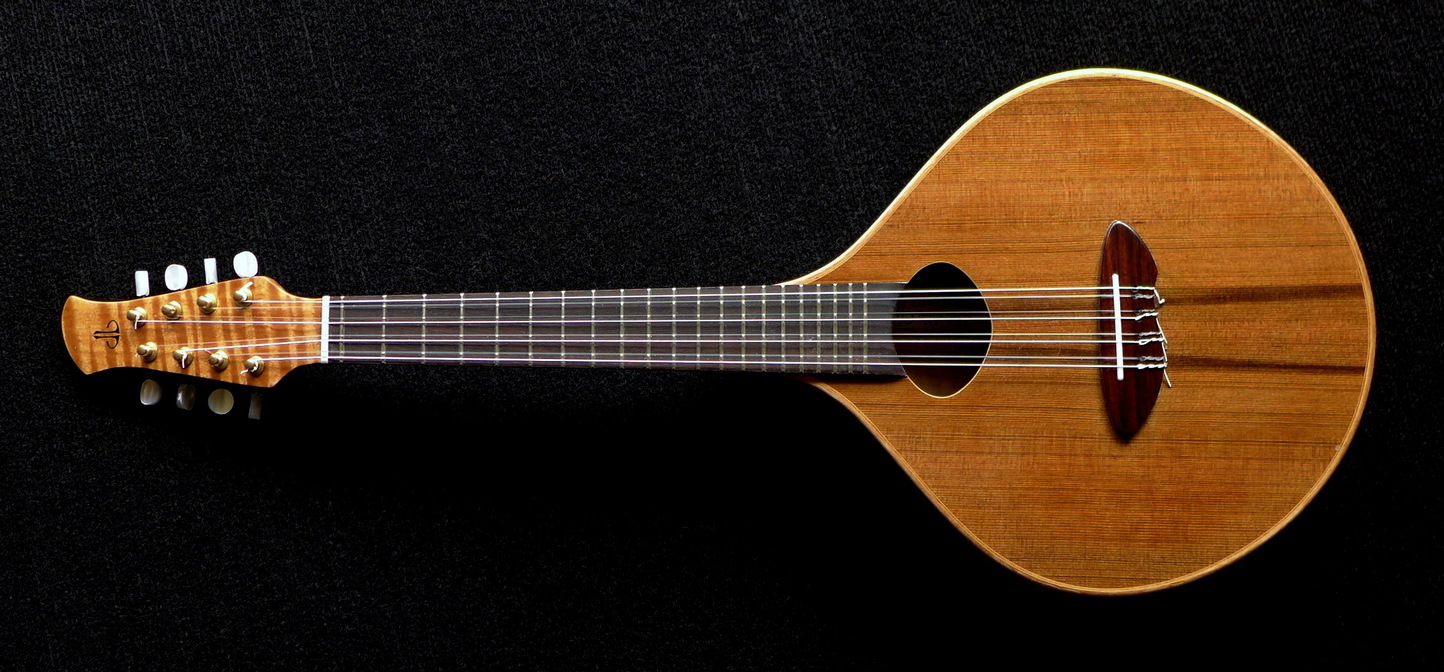
Polymer String or Classical Mandolin My other mandolin design is a fixed bridge version that uses fluorocarbon and wound nylon strings. The tension is similar to classical guitar so it is softer on the fingers than a steel string.. The G strings are classical guitar A strings. The D strings are a custom gauge .025 classical and a mono fluorocarbon .91mm. |
|
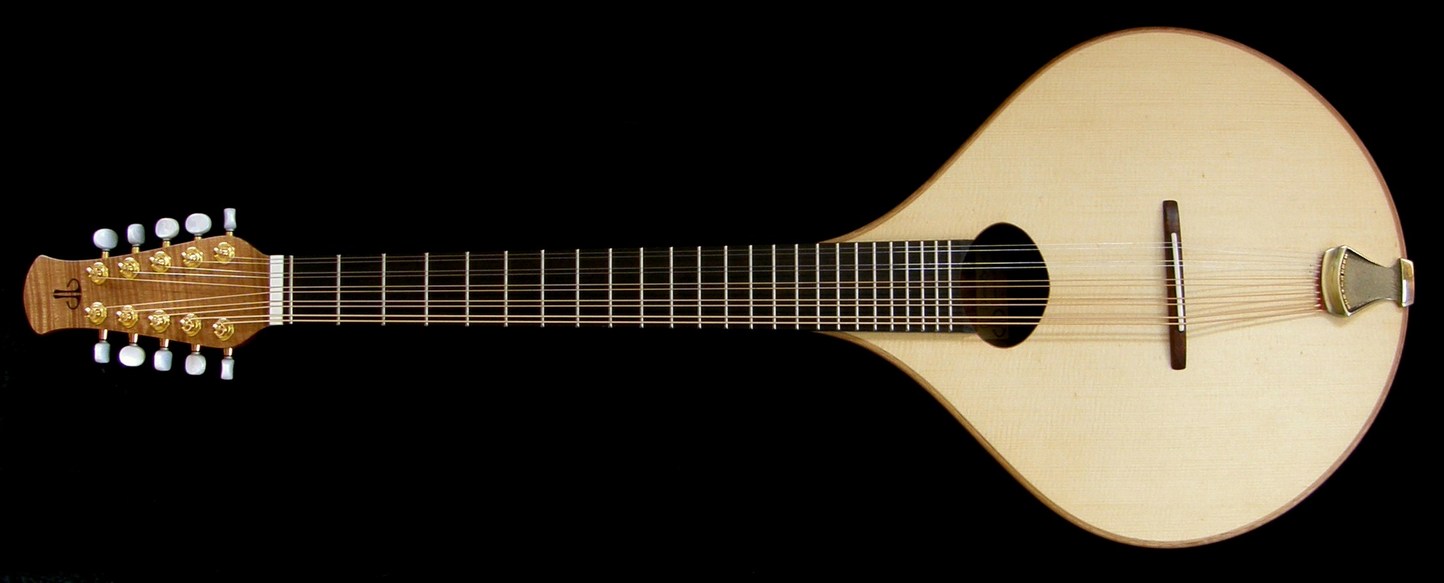 |
10 String 10 string citterns can be tuned in many ways. A common one is like an octave mandolin with a high A. This solves the problem in Celtic tunes of having to reach the high B by changing position. Another fixed bridge version has been tuning like a 12 string guitar without the bass E pair.
|
 |
 |
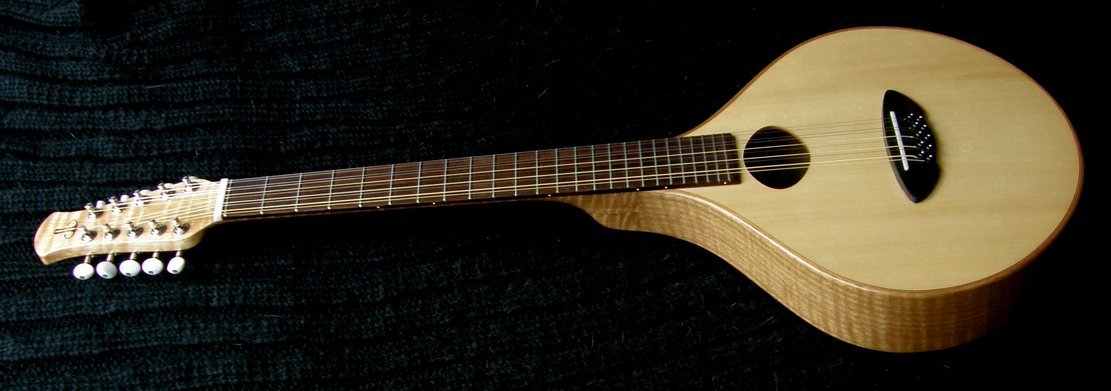
This version is mandola size with a scale of 43cm (17"). I have built some for baritone ukulele tuning DGBE, and been able to use octave pairs so that the high E (660hz) is the same pitch as a shorter mandolin E. The version in this video uses a concentric soundboard design which blends the light responsive tone of a uke with the full bass sound of my locked bridge design. Video Other possible tunings are mandola or octave mandolin. |
|
 |
Octave mandolin I have done two versions of this. One has unison pairs and is an octave below a mandolin. The other has octave pairs and is both mandolin pitch and an octave below. Brent Keogh playing the unison version The octave version |
|
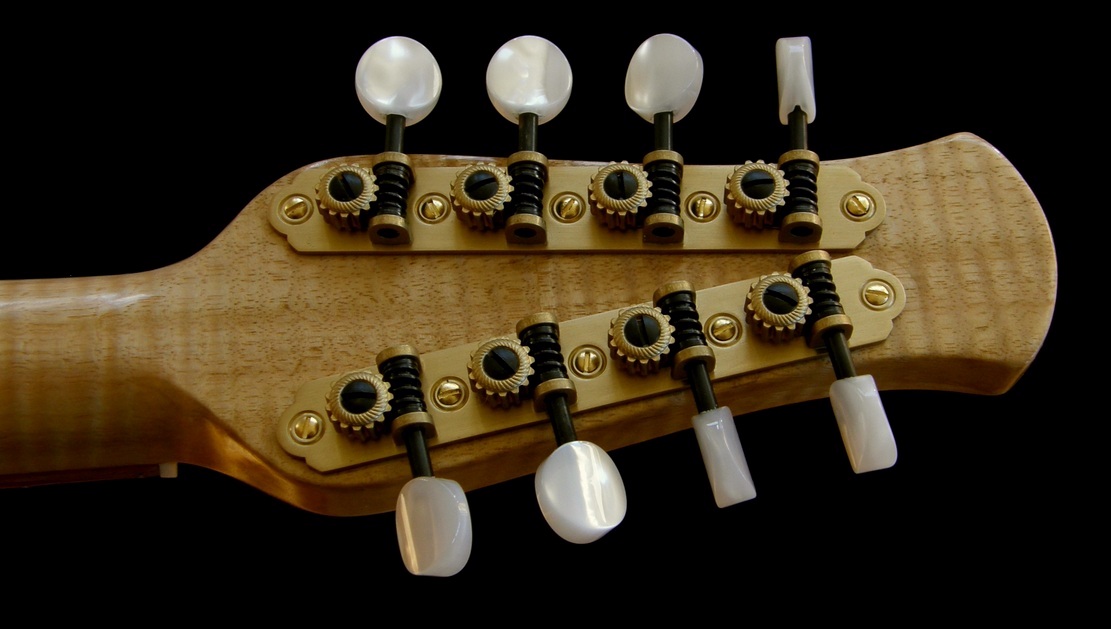 |
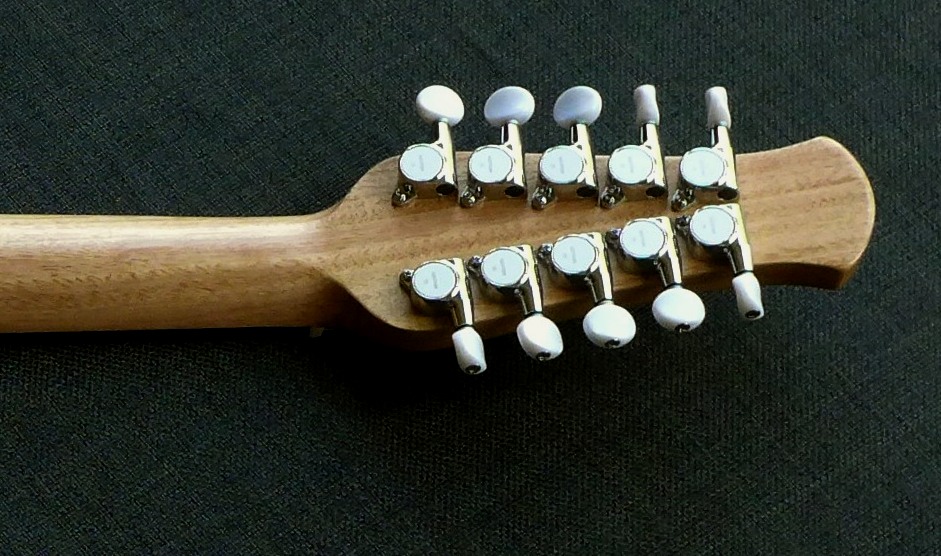
The zero fret system, tapered head and low head angle, tune much better than traditional style instruments. This is because there is almost no friction at the nut. I use these 1:15 ratio Rubner brass tuning heads from Germany. (left) or a variety of Japanese Gotoh tuners (right) if the weight is not a problem. |
 |
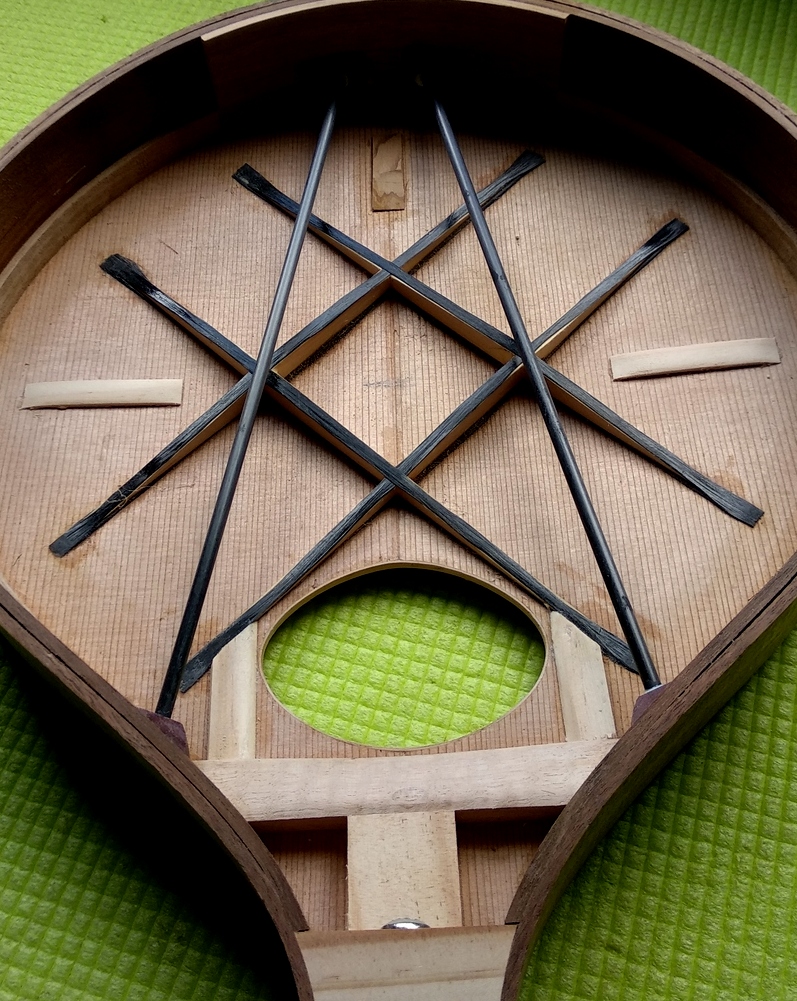 |
There are 2 hollow carbon rods that don't touch the front or back but support the string tension on the tailpiece. The long term distortion problems that effect oval soundhole mandolins (both Gibson and bowlback versions) simply cannot happen. The sides of the mandolin are double layered, using two 3mm layers to make 6mm. This helps to project the sound like a banjo rim. |
|
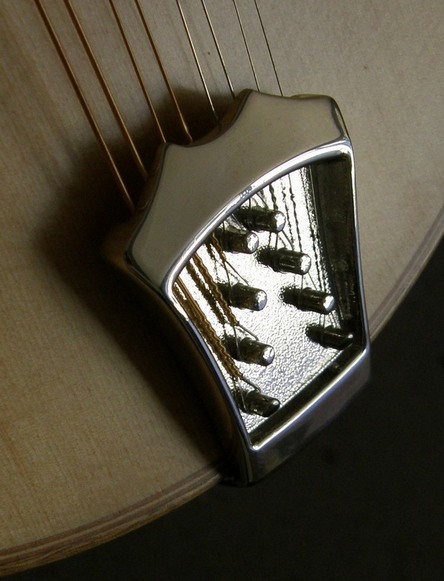
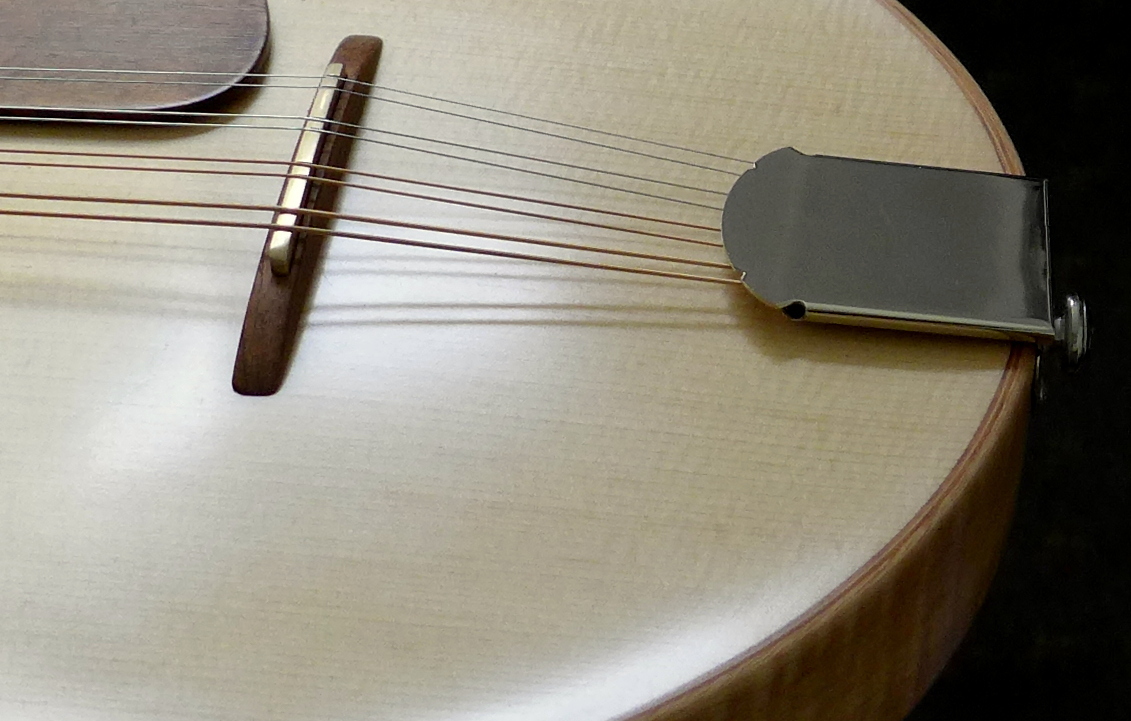
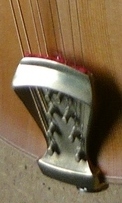
I use various tailpieces like the Ashton Bailey(left), a modified standard brass tailpiece (middle) and the Allen MR-2 (right) which can be ordered in brass to match brass heads. |
||
|
||
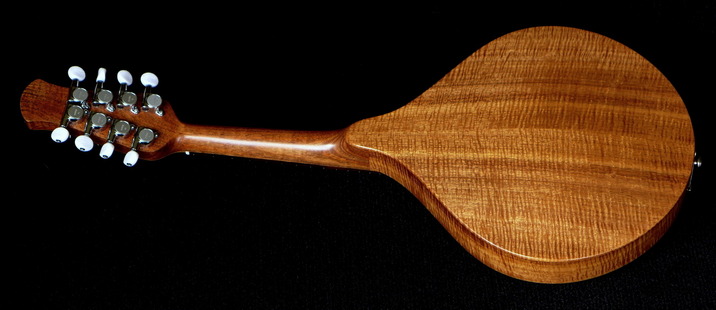
I use local Eucalypts on the majority of my mandolins. The mixture of stripe and fiddleback creates a look that I hope will raise the status of this undervalued timber. I sometimes have local figured Blackwood (bottom), which is harder to get and will cost a bit more. Below is a picture of my current back design that I call a turtleback. The two pieces are bent and shaped before joining to make a curved back. The result is very stable and prevents losing bass frequencies through body contact. I use this on all of my teardrop shaped instruments. |
||
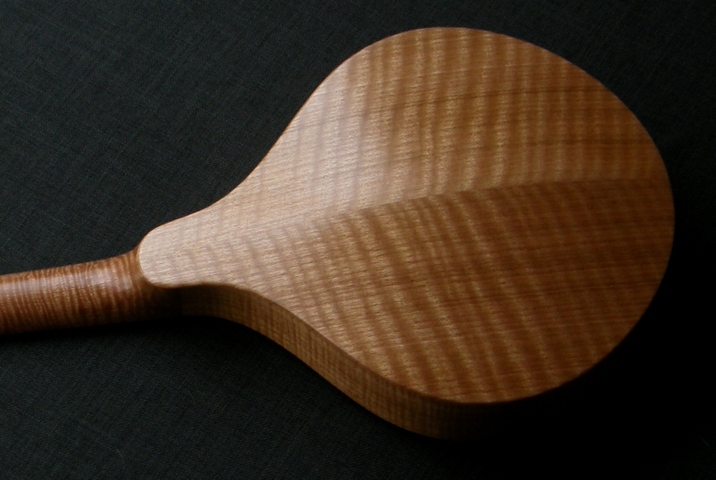 |
||
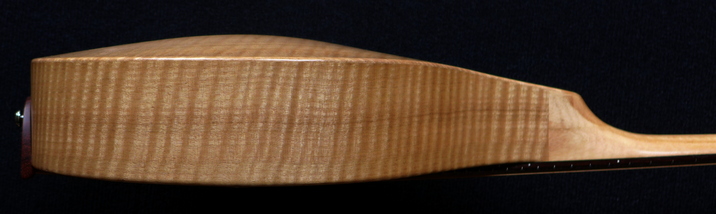 |
||
Polymer Strings for Mandolin Here is a page showing how I fit polymer strings onto my instruments. The G strings are wound nylon .033 but any classical A string will do. These can last years but will get duller with use. I like the dull G so I tend to leave them The D is a mix of a wound .026 custom gauge from D'addario (or a light gauge D) and an fc (fluorocarbon) monofilament .91mm. The reason for mixing them is that wound strings are rich in harmonics and thick monos are not. Having one of each creates a transition between the wound Gs and the mono As. The .91 will survive WW3 so need never be changed unless it gets tattered. This is rare but some batches of fc do it. Thin wound nylons like the .026 don't live long so keep a spare. The As are mono fc .66 which will also last for many years but should be changed if they get rough. The Es are fc .47mm. I personally have used mine for over 6 years, but I replaced them recently because some players have had breakage issues. I normally send a couple spares of these. You can get the fc from me, from Worth strings in Japan (custom order by the meter) or you can buy rolls of Seaguar fishing leader. An important issue is that, although the Japanese fc is high quality, the gauge isn't always %100 accurate. When you fit a string check the 12th fret against the harmonic. A slightly higher fret pitch is fine but if it is flat then you need to turn the string around (top to bottom) or try another. This is a problem that also occurs with nylon classical strings but is less common.
|
||
|
|
|
|
|
|
|
|
|
|